Steam Heat & Radiator Repair in Baychester, Bronx
When radiators spit dirty water, clank uncontrollably, or remain icy cold while your boiler runs non-stop, you need specialized radiator repair Baychester Bronx homeowners count on for precision mechanical balancing. NY Plumbing diagnoses and rectifies common steam distribution faults, restores quiet heating cycles, and protects your home against radiator leaks.
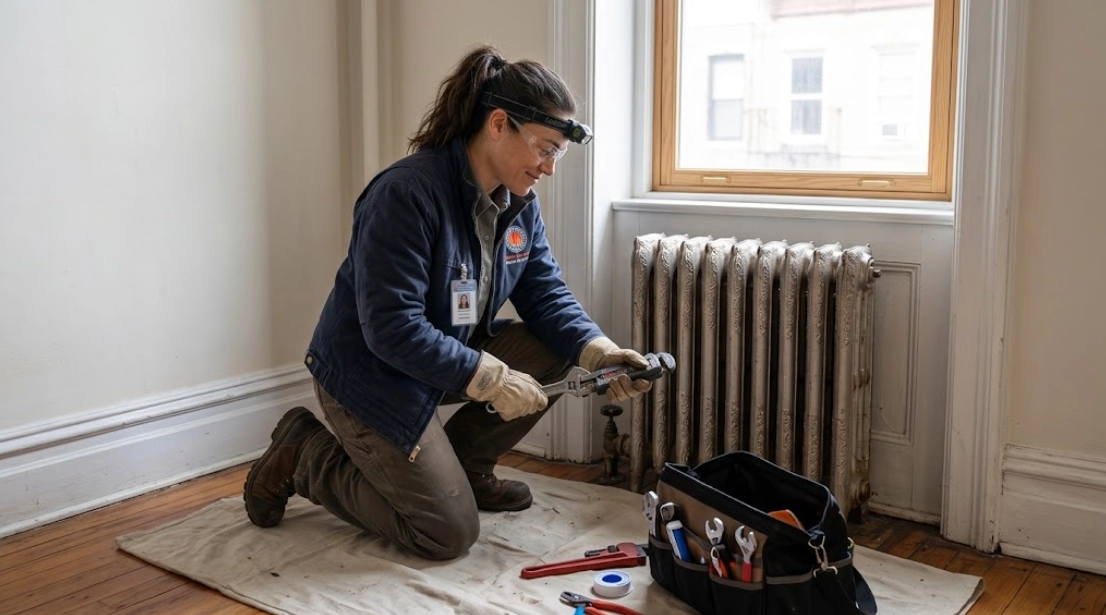
Restoring Quiet, Balanced Steam Heating in the East Bronx
Cast-iron steam radiators are an enduring architectural hallmark of residential buildings throughout Baychester, Edenwald, and Eastchester. Originally designed to deliver steady, radiant warmth during harsh northeastern winters, these systems operate under delicate physics. Unlike modern forced-air or pumped hydronic systems, low-pressure steam heating relies entirely on thermodynamics, natural air venting, and gravity-assisted condensate drainage.
When any element in this closed cycle deteriorates—whether it is a corroded air vent, a failing supply valve, or an improperly pitched radiator that has settled into hardwood flooring—the entire heating system suffers. Rooms closest to the boiler overheat while top-floor bedrooms remain freezing, accompanied by unbearable pipe racket. Our experienced heating technicians specialize in resolving complex distribution problems, performing precision steam radiator valve replacement Baychester Bronx properties require to function safely and quietly.
Common Steam Radiator Warning Signs
-
Loud Sledgehammer Pounding in Walls: Intense banging steam pipes Baychester Bronx residents hear indicate severe water hammer caused by steam colliding at high velocity with trapped condensate water.
-
Hissing, Whistling, or Spitting Air Vents: When a radiator air vent sticks open, it discharges scalding steam, hisses loudly, and damages adjacent walls and hardwood floors with rusty moisture.
-
Completely Cold or Half-Cold Radiators: Radiators that stay lukewarm or cold despite the boiler running indicate blocked air vents, stuck valve discs, or main-line venting failures.
-
Leaking Valve Stems and Floor Damage: Water pooling around the supply valve usually stems from degraded graphite packing or a worn brass ground joint union (the spud).
The Physics of Water Hammer: Why Banging Pipes Occur
One of the most frequent heating complaints in Baychester homes is loud, concussive pipe hammering. Understanding why this happens requires recognizing how single-pipe steam systems function:
In a single-pipe steam arrangement, the exact same pipe that delivers high-temperature steam from the boiler into the radiator must also carry condensed liquid water backwards down into the boiler. For this two-way traffic to work silently, steam must travel smoothly over a thin layer of draining water. Water hammer occurs when liquid water gets trapped inside the pipe or radiator body. When expanding steam contacts a pocket of cooler pooled water, the steam instantaneously implodes, creating a localized vacuum. Water is drawn forward at tremendous speeds—often over 60 miles per hour—slamming violently into pipe elbows, radiator valves, and cast-iron headers. Left unaddressed, water hammer can crack heavy cast-iron radiator sections, break pipe fittings inside finished ceilings, and damage the boiler itself.
Common Causes of Trapped Condensate
- Improper Radiator Pitch: Over decades, floor joists settle under the immense weight of cast-iron radiators. If a radiator tilts away from its supply valve, water pools at the back, preventing steam from entering and causing deafening bangs. Shimming the radiator feet with dense hardwood or composite wedges restores the required downward slope toward the valve.
- Partially Closed Radiator Valves: In a single-pipe system, a radiator valve cannot be throttled like a water faucet. If it is half-closed, the opening is too small for steam to enter and water to exit simultaneously. Condensate backs up, creating severe hammering. The valve must be 100% open or 100% closed.
- Sagging Distribution Mains in Basements: Pipe hangers in older Bronx basements can loosen, allowing long horizontal steam mains to sag in the middle, creating water traps.
- Excessive Boiler Operating Pressure: If a boiler's pressuretrol is miscalibrated and runs above 2 PSI, steam moves too fast, kicking water out of the boiler water line and flooding the distribution mains. Coordinated adjustments with our boiler repair in Baychester service restore ideal low-pressure operation.
Steam Radiator Valve Replacement & Spud Service
When a radiator supply valve seeps water around its handle, homeowners frequently try to overtighten the valve, snapping the brass stem or stripping the packing nut. Replacing a steam radiator valve is a delicate mechanical task because the valve connects to the cast-iron radiator via a tapered brass spud union.
Over 40 to 60 years of heating cycles, the brass spud often fuses tightly into the iron radiator tapping. If an inexperienced technician uses excessive blunt force, the cast iron boss around the radiator tapping will crack, destroying the radiator permanently. Our plumbers utilize dedicated internal spud wrenches, controlled induction heating techniques, and precision pipe dies to safely extract corroded spuds and install brand-new, commercial-grade steam angle valves that operate smoothly and seal completely tight.
Radiator Air Vent Calibration and Main Line Balancing
Cast-iron radiators only heat up when cold air is vented out so steam can rush in. Each radiator is equipped with a thermostatic air vent containing an alcohol-filled bellows or bi-metal disc that stays open while cool air escapes, and instantly snaps shut when hot steam touches it.
In two-family dwellings near Boston Road and Edenwald, unbalanced heating is almost always caused by improper air vent sizing. Radiators closest to the boiler often have large vents, causing them to steal all the heat before steam ever reaches the distant bedrooms. By installing calibrated, adjustable air vents and verifying that large quick-vent main line valves are active in the basement, our technicians balance heat distribution across every floor, lowering overall fuel bills and eliminating cold rooms.
Repair vs. Replacement for Radiators
Cast iron is exceptionally durable and can easily last over a century, making complete radiator replacement rare unless physical trauma or severe freeze-thaw cracking has occurred:
- Repair is Ideal When: The radiator body is sound, but the supply valve leaks, the air vent is stuck, the radiator needs pitch adjustment, or water hammer requires pipe alignment. Over 90% of radiator complaints are fully resolvable through component servicing.
- Replacement is Required When: A freeze-up has caused a cast-iron section to crack, internal casting seams have separated due to severe corrosion, or an unrepairable crack exists along the bottom push-nipple connections. When replacement is required, or when upgrading to modern slimline convectors or hydronic baseboards during a boiler replacement in Baychester, we provide complete mechanical integration.
What Influences Radiator Repair Costs
Every radiator issue involves distinct physical access and pipe conditions. Key factors influencing repair scope include:
- Valve and Spud Extraction Complexity: Standard valve body replacements versus seized spuds requiring internal extraction from aged cast iron.
- Access and Clearance: Freestanding cast-iron radiators versus recessed wall units or decorative enclosures that require careful disassembly.
- Main Line Basement Venting: Adding high-capacity Hoffman or Gorton quick-vents to basement steam mains to relieve pressure and speed heat delivery.
- Pipe Re-Pitching and Hanger Upgrades: Re-securing horizontal iron steam risers and lifting settled radiator legs to correct gravity return angles.
Related Heating & Plumbing Services
Maintain balanced heating and reliable plumbing across your property with our dedicated local services:
- Boiler Repair in Baychester, Bronx — Complete burner servicing, pressure relief valves, and low-water cutoffs.
- Boiler Replacement — Accurate EDR sizing, oil-to-gas conversions, and NYC DOB permitted installations.
- Water Heater Repair — Tank and tankless domestic hot water repairs and sediment flushes.
- Gas Line Repair & Inspection — Certified gas line testing, stove installations, and NYC Local Law 152 inspections.
- Service Areas — Detailed heating and plumbing coverage throughout Baychester, Edenwald, Eastchester, and surrounding areas.
Frequently Asked Questions About Radiator Repair
Why are my steam pipes violently banging in Baychester?
Violent banging or water hammer occurs when rising steam collides with trapped, cooled condensate water inside the pipe. This is caused by improper pipe pitch, a settled radiator tilted the wrong way, a partially closed radiator supply valve on a single-pipe system, or a waterlogged steam header.
Why is my cast-iron radiator staying cold while the boiler is running?
A radiator remains cold when trapped air cannot escape through its air vent, preventing steam from entering. Corrosion, mineral scale, or paint frequently clog the vent orifice. Additionally, a stuck supply valve disc or an unvented steam main riser can keep rooms completely cold.
Can I partially close a steam radiator valve to lower the room temperature?
No. On a standard single-pipe steam system, the radiator valve must be either 100% fully open or 100% tightly closed. A partially open valve restricts the return of condensing water through the single pipe, creating severe water hammer, valve leaks, and spurting steam.
How does steam radiator valve replacement work?
The boiler is shut down and depressurized. The old brass valve and its internal spud fitting are carefully extracted from the radiator tapping using specialized internal spud wrenches without cracking the cast iron. A new, heavy-pattern steam angle valve and matching spud are installed with high-temperature sealant.